Summer heat is no longer a seasonal inconvenience — in many regions, it’s a year-round challenge. As electricity bills climb and power cuts become more common, homeowners and businesses are searching for smarter cooling solutions. This is exactly where DC air conditioners enter the conversation.
If you’ve been researching energy-efficient cooling systems, chances are you’ve come across the term “Air Conditioner DC” and wondered how it differs from a regular AC, whether it works with solar power, and if it’s actually worth the investment. This guide answers all of that in plain, practical language — no technical jargon overload, just clear information you can use to make a confident decision.
What Is a DC Air Conditioner?
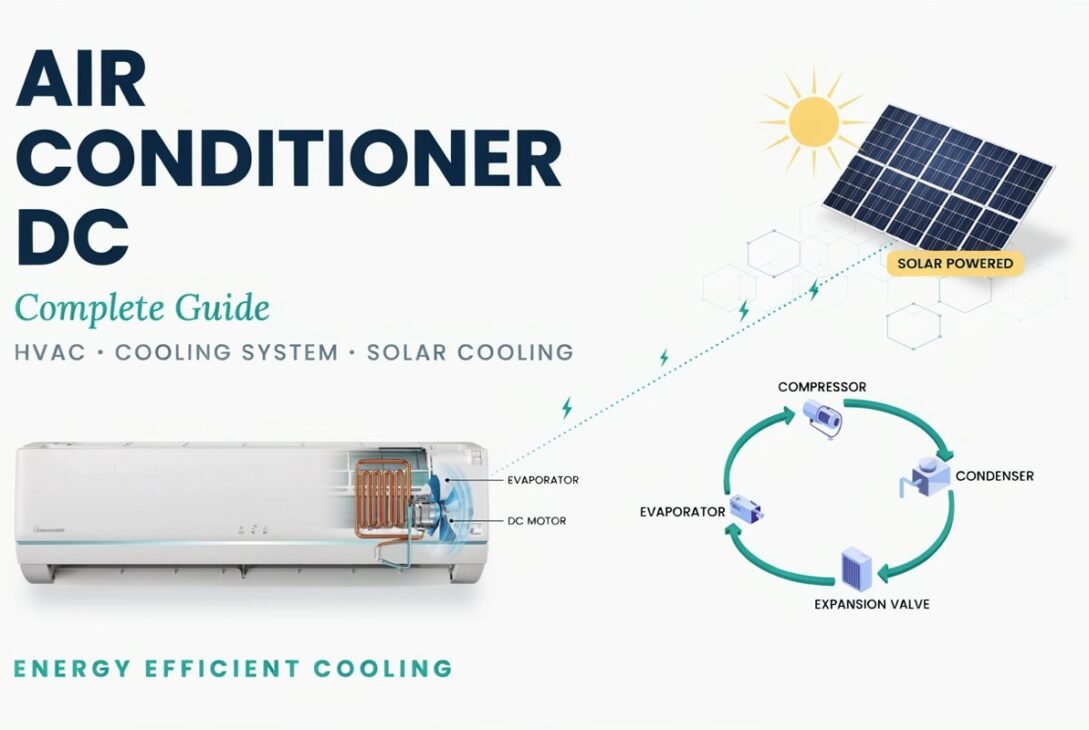
A DC air conditioner is a cooling system that uses Direct Current (DC) power, either partially or fully, to run its compressor and internal components. Unlike traditional AC units that rely entirely on Alternating Current (AC) from the grid, DC air conditioners are designed to run efficiently on DC power sources — most notably, solar panels.
In simple terms:
- Traditional AC = Runs on AC power only, pulled directly from the electrical grid.
- DC Air Conditioner = Runs on DC power, often sourced from solar panels or batteries, sometimes with a hybrid AC/DC setup.
This distinction matters because DC power is what solar panels naturally produce. That means a DC air conditioner can be connected more directly to a solar power system, reducing conversion losses and improving overall efficiency.
How Does a DC Air Conditioner Work?
To understand why DC ACs are gaining popularity, it helps to know what happens inside the unit.
The Inverter Technology Connection
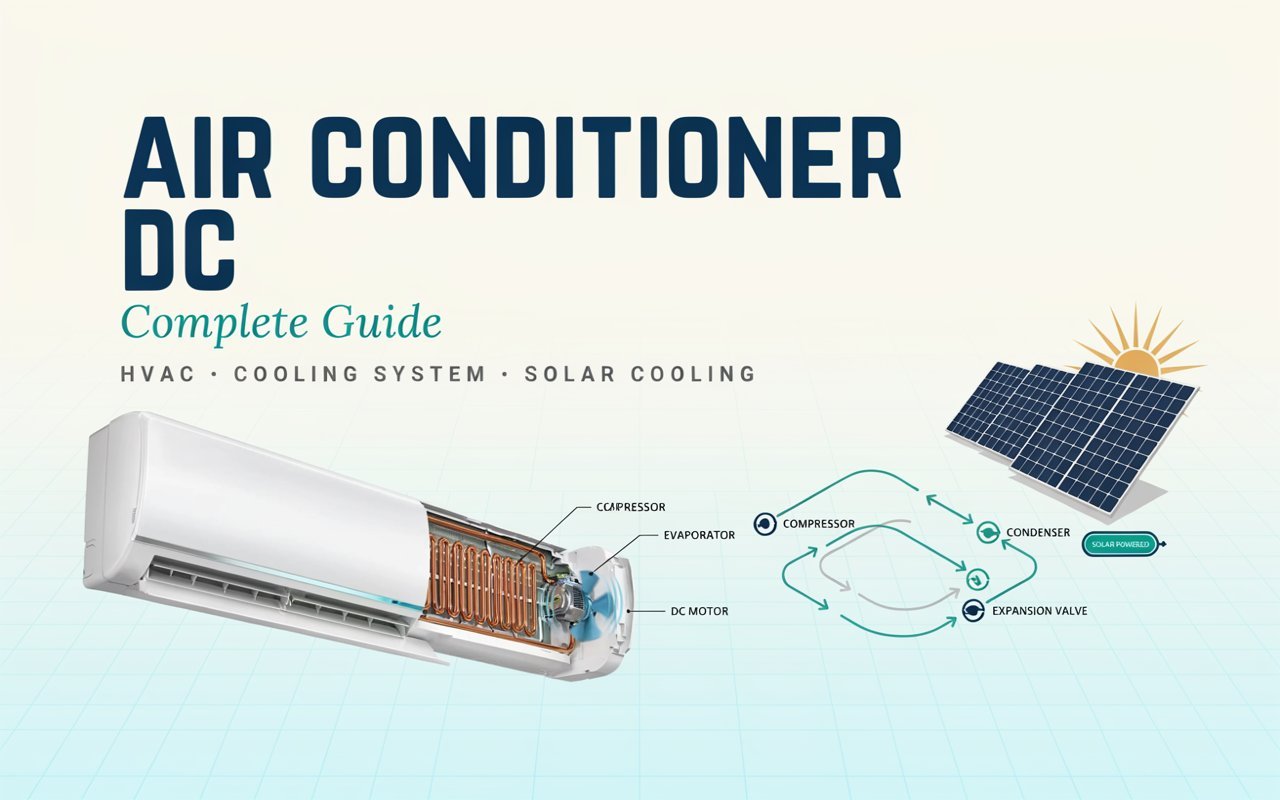
Most modern DC air conditioners use inverter compressor technology. Instead of switching the compressor fully on or fully off (like older fixed-speed ACs), an inverter DC compressor adjusts its speed based on the room’s cooling needs. This means:
- Less energy wasted on repeated start-stop cycles
- More consistent room temperature
- Lower electricity consumption over time
- Quieter operation
DC Power Flow in Solar-Compatible Units
In a solar-powered DC air conditioner setup, the process generally looks like this:
- Solar panels generate DC electricity from sunlight.
- The DC power is sent to the air conditioner’s compressor.
- A hybrid controller manages power flow, switching between solar DC power and grid AC power (converted to DC) depending on availability.
- The unit cools your room using whichever power source is currently active.
This hybrid flexibility is one of the biggest advantages of DC air conditioners — you’re not fully dependent on either solar energy or grid electricity alone.
DC Air Conditioner vs Traditional AC: Key Differences
air conditioner dc
| Feature | DC Air Conditioner | Traditional AC |
|---|---|---|
| Power source | DC (solar/battery) or hybrid AC-DC | AC (grid only) |
| Compressor type | Usually inverter-based | Often fixed-speed |
| Energy efficiency | Higher | Lower to moderate |
| Solar compatibility | Direct or near-direct | Requires inverter conversion |
| Running cost | Generally lower long-term | Higher long-term |
| Initial cost | Higher upfront | Lower upfront |
| Noise level | Quieter | Comparatively louder |
The upfront cost of a DC air conditioner is typically higher, but the long-term savings on electricity bills — especially when paired with solar panels — often justify the investment within a few years.
Why DC Air Conditioners Are Gaining Popularity
1. Rising Electricity Costs
As utility rates increase globally, households are actively looking for appliances that consume less power without sacrificing performance. DC ACs, particularly inverter models, are built around this exact need.
2. Frequent Power Outages
In regions where load-shedding or unstable grid supply is common, a DC air conditioner that can run on solar or battery backup offers uninterrupted comfort — something a standard AC simply cannot do without a separate, often expensive, backup system.
3. Growing Solar Adoption
Over the last decade, falling panel prices and steady efficiency gains have driven a sharp rise in solar installations worldwide. Naturally, appliances that can work directly with solar systems — like DC air conditioners — are becoming more attractive to homeowners who’ve already invested in solar infrastructure.
4. Environmental Awareness
Lower energy consumption directly translates to a reduced carbon footprint. For environmentally conscious consumers, this is a meaningful factor in the decision-making process.
Solar Cooling: How Solar Panels Power DC Air Conditioners
Solar cooling refers to using solar energy to power air conditioning systems, and DC air conditioners are central to making this practical and efficient.
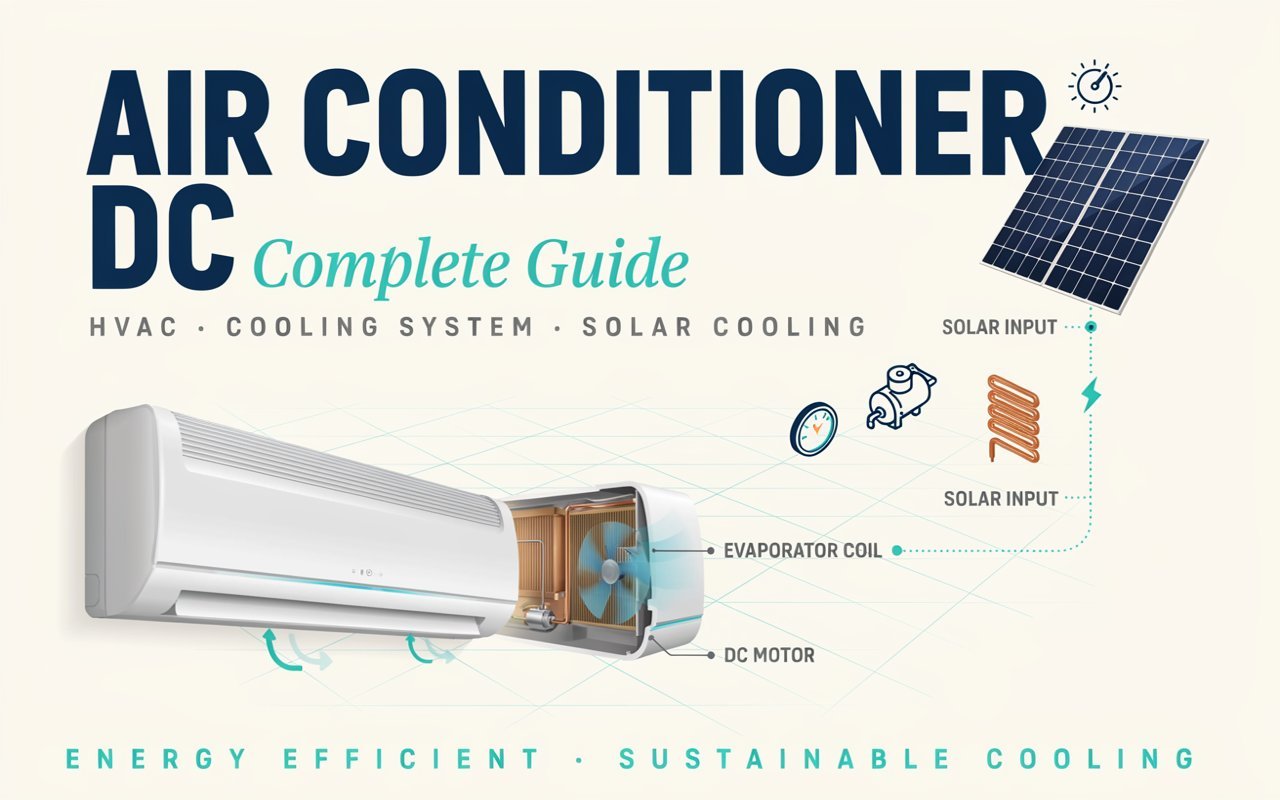
Components of a Solar-Powered AC Setup
- Solar panels – Capture sunlight and convert it into usable DC electricity
- Charge controller – Regulates voltage and current from the panels
- Battery bank (optional) – Stores excess energy for use during low sunlight or nighttime
- Hybrid inverter/controller – Manages switching between solar DC and grid AC
- DC air conditioner unit – Consumes the power to cool your space
Benefits of Solar-Powered DC Cooling
- Reduced dependency on grid electricity
- Lower monthly power bills, especially during peak summer usage
- Backup cooling during outages if a battery bank is included
- Long-term return on investment as solar equipment pays for itself over time
- Reduced strain on the electrical grid during high-demand periods
A Realistic Example
Consider a household running a 1.5-ton DC inverter air conditioner for around 8 hours a day. With a properly sized solar panel setup (roughly 2-3 kW depending on sunlight availability and other loads), a significant portion of daytime cooling can be powered directly by solar energy, cutting grid electricity usage substantially during those hours. Actual savings vary based on climate, panel efficiency, and local sunlight hours, so it’s worth consulting a solar installer for a system sized to your specific home.
Things to Consider Before Buying a DC Air Conditioner
1. Cooling Capacity (Tonnage)
Choose based on room size. A general guideline:
- Up to 120 sq. ft. → 1 ton
- 120–180 sq. ft. → 1.5 ton
- 180–250 sq. ft. → 2 ton
2. Energy Efficiency Rating
Look for high star ratings or ISEER (Indian Seasonal Energy Efficiency Ratio) values in relevant markets, or the equivalent SEER rating elsewhere. Higher ratings mean better efficiency.
3. Solar Compatibility
If solar integration is your goal, confirm the unit supports direct DC input or hybrid operation — not all “inverter ACs” are solar-compatible by design.
4. Battery Backup Needs
Decide whether you need battery storage for nighttime or cloudy-day cooling, or whether grid backup is sufficient.
5. Brand Reliability and Warranty
Choose manufacturers with a proven track record in inverter and solar-compatible technology, along with solid after-sales support and warranty coverage on the compressor.
6. Installation Requirements
Solar-compatible DC ACs may require additional installation work, including panel placement, controller setup, and wiring — factor this into your budget and timeline.
Maintenance Tips for DC Air Conditioners
Keeping your DC air conditioner running efficiently doesn’t require anything drastic — just consistent care:
- Clean or replace air filters every 2-4 weeks during heavy use
- Keep outdoor units free of dust, leaves, and debris
- Book a professional tune-up at least once every year
- Check refrigerant levels periodically (by a certified technician)
- Inspect solar panel connections and clean panel surfaces for optimal energy capture
- Monitor battery health if using a storage system
Regular maintenance not only extends the lifespan of your unit but also preserves its energy efficiency over time.
Is a DC Air Conditioner Worth the Investment?
air conditioner dc
For most households, the decision comes down to three factors: your local climate, current electricity rates, and whether solar panels are already installed or on the horizon.
- If you live in a hot climate with high cooling needs and expensive or unreliable electricity, a DC air conditioner — especially paired with solar — can offer strong long-term value.
- If your cooling needs are minimal or electricity is inexpensive and stable, a standard inverter AC might be a more cost-effective choice.
There’s no one-size-fits-all answer, but understanding your usage pattern and local energy conditions will guide you toward the right decision.
Frequently Asked Questions
1. What is the difference between a DC air conditioner and an inverter air conditioner?
An inverter AC refers to compressor technology that adjusts speed for efficiency. A DC air conditioner specifically refers to the power source — it can run on DC electricity from solar panels or batteries. Many DC ACs also use inverter technology, but the terms aren’t identical.
2. Can a DC air conditioner run entirely on solar power?
Yes, if paired with a sufficiently sized solar panel system and battery backup. However, most setups use a hybrid configuration that switches between solar and grid power depending on sunlight availability.
3. Are DC air conditioners more expensive than regular ACs?
Generally, yes, in terms of upfront cost. However, the lower running costs over time — especially with solar integration — often offset the initial investment within a few years.
4. How many solar panels are needed to run a DC air conditioner?
This depends on the AC’s tonnage and power consumption, along with local sunlight hours. A qualified solar installer can calculate the exact panel count and battery capacity needed for your specific unit and location.
5. Do DC air conditioners work at night without solar power?
Only if connected to a charged battery bank or the grid. Without stored energy or grid backup, a DC air conditioner cannot run on solar power alone after sunset.
6. Is a DC air conditioner good for homes without solar panels?
Yes. Many DC air conditioners still offer improved energy efficiency through inverter technology, even without solar integration, making them a reasonable choice for reducing electricity bills.
7. How long do DC air conditioners typically last?
With proper maintenance, most units last 10-15 years, similar to standard inverter air conditioners, though actual lifespan depends on usage patterns, climate, and maintenance quality.
Conclusion
A DC air conditioner represents a meaningful shift in how we approach home cooling — moving away from complete grid dependency toward smarter, more sustainable options. By leveraging DC power and, in many cases, solar energy, these systems offer a compelling combination of energy efficiency, cost savings, and resilience during power outages.
Whether a DC air conditioner is the right choice for you depends on your climate, budget, and long-term energy goals. But as electricity costs continue to rise and solar technology becomes more accessible, this cooling solution is worth serious consideration for anyone planning a new AC purchase or upgrading an existing HVAC system